Low sperm count diagnosis and fertility treatment for men in Panchkula & Zirakpur – Kore Fertility Solutions.
Low Sperm Count Treatment in Panchkula & Zirakpur
Low sperm count, medically known as oligospermia, is one of the leading causes of male infertility in Panchkula, Zirakpur, Chandigarh and Tricity. When semen contains fewer than
15 million sperm per millilitre, natural conception becomes harder — but pregnancy is still very possible with
modern fertility treatment.
Under the expert guidance of Dr. Nitasha Gupta – Consultant Gynecologist & IVF Specialist,
Kore Fertility Solutions provides comprehensive diagnosis and personalised fertility care for couples facing
male infertility challenges.
✅ Common Causes of Low Sperm Count
Smoking, alcohol and substance use
Poor nutrition or obesity
Varicocele (enlarged scrotal veins)
Hormonal imbalance
Past infections or fever episodes
Heat or chemical occupational exposure
Chronic stress and sleep deficiency
✅ Diagnosis – Semen Analysis in Zirakpur
The cornerstone investigation is a detailed semen analysis. Our evaluation includes:
Repeat semen testing
Hormonal profile (FSH, LH, Testosterone)
Scrotal ultrasound
Varicocele assessment
Genetic screening if clinically required
✅ Treatment Options
Lifestyle Treatment
Smoking and alcohol cessation
Diet and weight management
Prescription antioxidant therapy
Testicular heat protection
Medical & Surgical Treatment
Hormonal therapy correction
Infection treatment
Varicocele microsurgery
Advanced Fertility Treatments
IUI – for mild oligospermia
IVF – when multiple infertility factors are present
ICSI – single sperm injection for very low sperm counts
✅ 90-Day Natural Sperm Improvement Plan
Stop smoking and alcohol completely
Follow a high-protein Mediterranean diet
Exercise 30 minutes daily
Take Zinc, Vitamin D and CoQ10 supplements (doctor guided)
Sleep 7–8 hours nightly and manage stress
✅ FAQs – Male Infertility in Panchkula & Zirakpur
Can low sperm count be cured?
Yes. Many men improve with appropriate lifestyle changes, medications or surgery.
What treatment is best for severe low sperm count?
ICSI IVF provides the highest pregnancy success rates.
Where can semen analysis be done in Zirakpur?
At Kore Fertility Solutions, Dhakoli near Zirakpur.
How long before improvement occurs?
Typically within 3 months — the natural sperm production cycle.
Male infertility in Panchkula — symptoms, diagnostic tests and modern treatment options at Kore Fertility Centre.
Male Infertility in Panchkula – Symptoms, Tests & Treatment Options
Male infertility in Panchkula is an increasingly searched topic as couples seek timely, evidence-based evaluation and treatment. Understanding the common symptoms of male infertility, the essential diagnostic tests, and the most effective treatment options helps men and couples take the right steps toward conception. If you are searching for a reliable infertility specialist in Panchkula or a dedicated male infertility doctor in Panchkula, this guide explains what to expect and when to seek specialist care.
1. What is Male Infertility?
Male infertility refers to a man’s reduced ability to cause pregnancy in a fertile female partner. It can result from problems with sperm production, sperm function, or delivery. In the Panchkula and surrounding Tricity region, early evaluation at a specialised fertility centre significantly improves outcomes.
2. Common Symptoms & Warning Signs
Difficulty conceiving after 12 months of regular, unprotected intercourse (6 months if female partner is over 35).
Abnormal ejaculations (reduced volume, painful ejaculation, or absence of ejaculation).
Changes in sexual function such as decreased libido or erectile dysfunction.
Visible testicular issues — swelling, lumps, small or soft testes, or history of testicular trauma.
Hormonal symptoms — hair loss, fatigue, or gynecomastia suggestive of endocrine imbalance.
3. Key Diagnostic Tests for Male Infertility
Accurate diagnosis is the first step. Leading male infertility doctors in Panchkula use a stepwise approach:
Semen analysis (volume, count, motility, morphology) — cornerstone of male fertility testing.
Repeat semen tests to confirm results and account for natural variability.
Medical therapy — hormonal treatments for specific endocrine disorders; antibiotics for proven infections.
Varicocele repair — microsurgical correction for clinically significant varicoceles linked to poor semen parameters.
Assisted reproductive technologies (ART) — IUI, IVF, and ICSI. In male factor infertility, ICSI often provides the best success rates.
Surgical sperm retrieval (TESA, PESA, micro-TESE) for men with azoospermia when viable sperm are present in the testes.
Use of donor sperm — an option when own sperm retrieval or quality is not feasible.
5. What Increases Treatment Success?
Success depends on timely diagnosis, the severity of male factor, female partner’s reproductive health, and centre experience. For men in Panchkula, choosing an infertility specialist in Panchkula with a high-quality embryology lab and tailored protocols can improve outcomes.
6. When to See an Infertility Specialist
Failure to conceive after 12 months (6 months if female partner is >35)
Prior low semen analysis or known testicular problems
History of undescended testes, mumps orchitis, genital trauma, or chemotherapy
Concerns about sexual function or hormonal symptoms
Male infertility in Panchkula is a treatable condition when diagnosed early by a qualified male infertility doctor in Panchkula. Accurate semen analysis, appropriate hormonal and imaging tests, and a personalised treatment plan — including lifestyle changes and ART when required — provide the best chance for successful conception. If you are searching for an experienced infertility specialist in Panchkula, contact Kore Fertility Solutions for a comprehensive evaluation and tailored care.
Frequently Asked Questions (FAQs)
Q1. How common is male infertility?
Male factor contributes to roughly 30%–50% of infertility cases overall. Many causes are treatable with appropriate evaluation.
Q2. Can lifestyle changes really improve sperm quality?
Yes. Improving diet, exercise, avoiding heat exposure, quitting smoking, and reducing alcohol can significantly improve semen parameters in many men.
Q3. How long until I see improvement after treatment?
Sperm production cycles take about 74–90 days. For many interventions, measurable improvements are often seen after 3 months, though timelines vary by cause.
Q4. Do I need genetic testing?
Genetic testing is advised when semen analysis shows severe oligospermia or azoospermia, or if there is a relevant family history.
Q5. Will ART cure male infertility?
ART (ICSI/IVF) helps bypass many male factor issues and often enables conception even with poor semen parameters, but addressing underlying health improves long-term outcomes.
Choosing between IUI and IVF is one of the most common questions patients ask at our Panchkula and Chandigarh clinics. This short introduction helps Google understand the page better and gives local context for indexing.
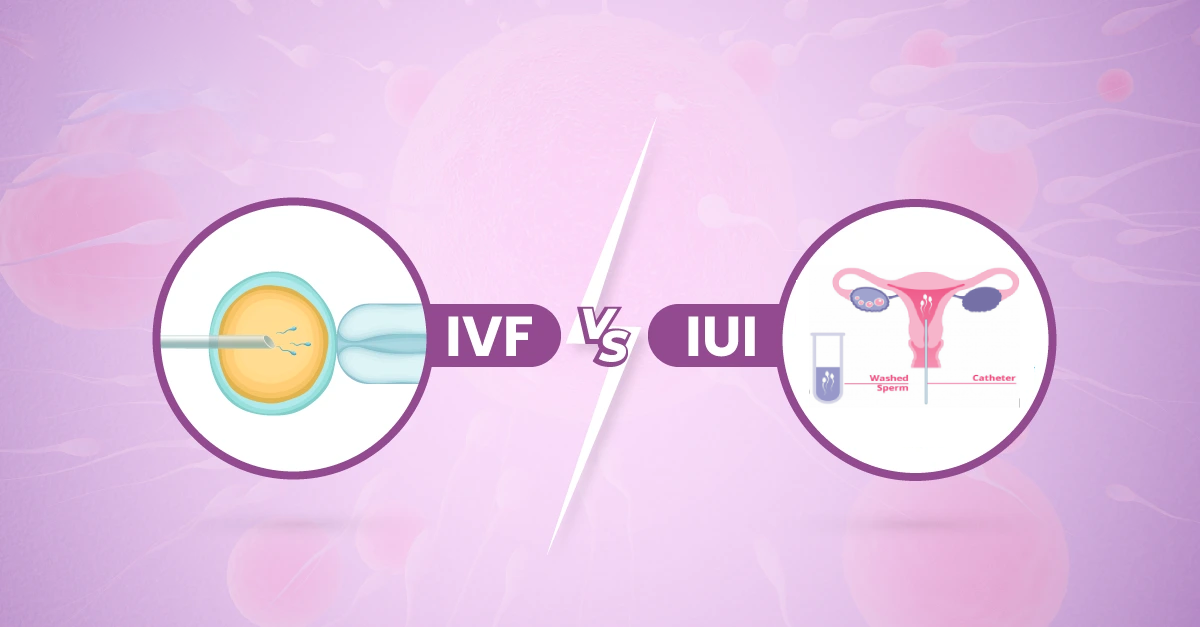
IVF vs IUI: visual comparison of two major fertility treatments.
The Difference Between IUI and IVF: A Complete, Expert-Backed Guide
Infertility affects nearly 15–18% of couples in India (WHO). Because this challenge is becoming more common, many couples try to understand the exact difference between IUI (Intrauterine Insemination) and IVF (In Vitro Fertilization). Although both treatments aim to help with conception, they work in completely different ways and therefore suit different medical conditions.
To simplify this decision, this guide follows the structured approach used by Dr. Nitasha Gupta – Consultant Gynecologist & IVF Specialist. She treats infertility, PCOS, endometriosis, recurrent pregnancy loss, and hormonal issues across Panchkula, Chandigarh, Mohali & Dera Bassi. As a result, this article is clear, medically accurate, and aligned with trusted global standards such as ASRM, CDC, and WHO.
What Is IUI?
IUI is a simple and minimally invasive fertility treatment. During this procedure, healthy, processed sperm is placed directly into the uterus close to the time of ovulation. Because the distance between the sperm and egg becomes shorter, the chances of natural fertilization increase significantly.
1. Sperm Preparation: The andrology lab chooses the healthiest sperm (PubMed reference).
2. Ovulation Monitoring: The doctor tracks ovulation using ultrasound scans, hormone blood tests, ovulation kits, or medications like Letrozole, Clomid, or low-dose gonadotropins.
3. Insemination: A thin catheter inserts sperm directly into the uterus. Because the process is quick and comfortable, most women resume daily activities immediately.
4. Aftercare: A pregnancy test is usually done after 14 days.
When Is IUI Recommended?
Mild male infertility
Low sperm motility
Cervical mucus challenges
Unexplained infertility
Mild PCOS
Donor sperm cycles
Couples who prefer beginning with a simpler option
IVF is an advanced fertility treatment in which eggs are retrieved from the ovaries, fertilized in a laboratory, and then healthy embryos are transferred into the uterus. Because IVF bypasses several natural barriers, it offers considerably higher success rates than IUI.
How IVF Works
1. Ovarian Stimulation: Fertility injections stimulate the ovaries to produce multiple mature eggs.
2. Egg Retrieval: A short, painless procedure where eggs are collected using an ultrasound-guided needle.
3. Fertilization Methods:
Conventional IVF: Eggs and sperm are cultured together.
ICSI: A single sperm is injected directly into an egg, which is especially useful for severe male infertility.
4. Embryo Culture: Embryos grow in the lab for 3–5 days.
5. Embryo Transfer: One or more healthy embryos are placed into the uterus.
6. Pregnancy Support: Hormones help the uterine lining prepare for implantation.
IUI is simple and quick, whereas IVF includes stimulation, retrieval, lab fertilization, and embryo transfer.
2. Success Rates
IUI: 10–20% per cycle IVF: 40–70% per cycle depending on age (ASRM)
3. Cost
IUI: ₹7,000–₹10,000 per cycle IVF: ₹1,00,000–₹2,00,000 per cycle
4. Suitability
IUI works well for mild infertility, whereas IVF is better for moderate to severe conditions.
5. Ovarian Stimulation
IUI usually uses mild stimulation, but IVF requires controlled ovarian hyperstimulation for higher egg yield.
Which Treatment Is Better?
IUI is recommended when:
Younger age
Mild infertility
Open fallopian tubes
A budget-friendly start is preferred
IVF is recommended when:
Tubes are blocked
Male infertility is severe
3–4 IUI cycles have failed
Higher success is required quickly
Conclusion
Both IUI and IVF help couples achieve pregnancy; however, they differ in complexity, success rate, and cost. While IUI is affordable and less invasive, IVF offers far higher success rates and becomes essential for complex infertility cases. Because each couple’s fertility journey is unique, choosing the right treatment depends on age, medical history, and reproductive goals.
This comparison is specially prepared for patients seeking IUI and IVF treatment in Panchkula, Chandigarh, Mohali, and nearby areas.